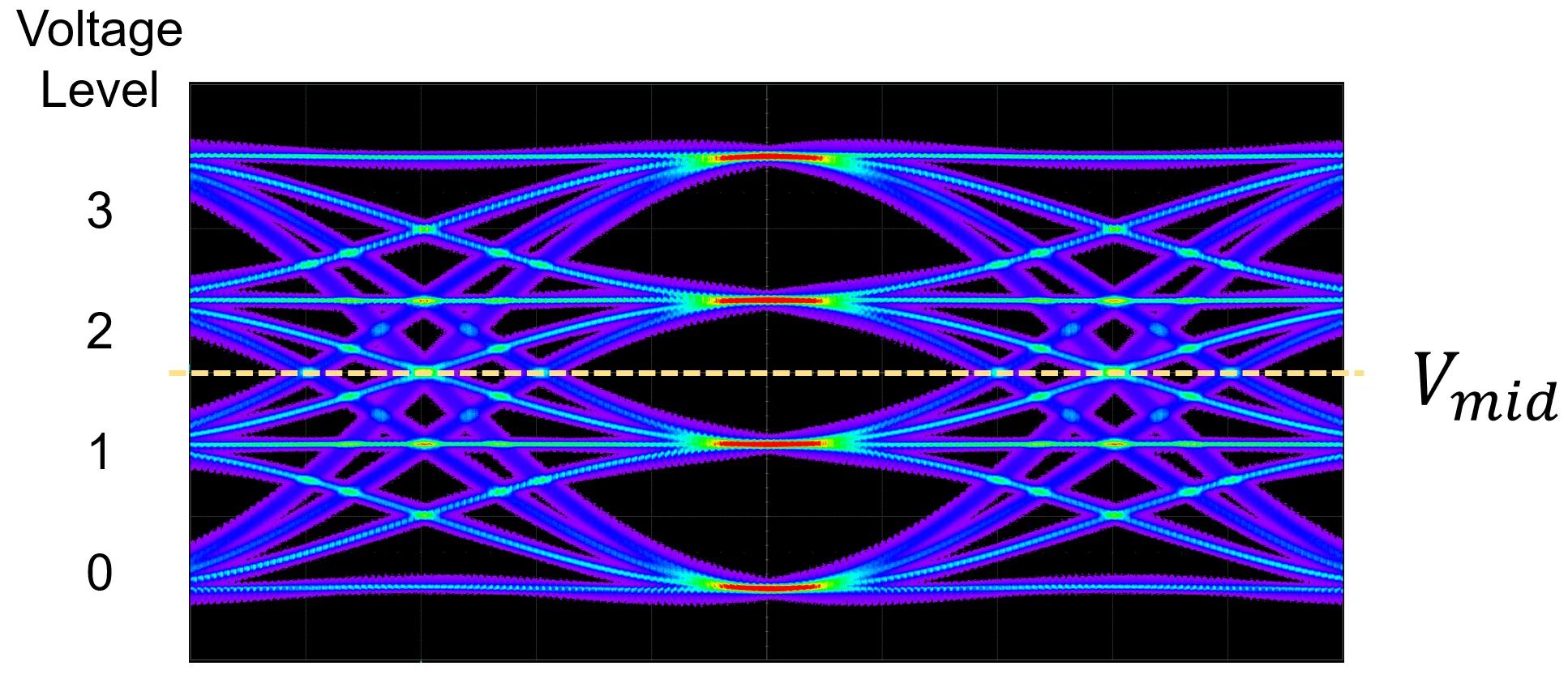
Why it matters: PCIe 6.0’s PAM4 signaling raises the bar for compliance. New patterns and measurement rules reduce ambiguity, but only if labs generate, capture, and analyze them correctly.
What’s new in the compliance patterns
- CP0/CP1 for PAM4: Updated symbols and transition densities stress equalization and clock recovery differently than NRZ-era patterns.
- Link training awareness: Patterns assume proper LTSSM behavior; mis-sequenced training can skew eye openings and BER results.
- Scrambling and de-emphasis: Specs clarify when scrambling is disabled and how preset/de-emphasis settings apply during testing.
Measurement reminders
- Use scopes/analyzers that support PAM4-specific eye masks and jitter decomposition (Rj/Dj, SNDR).
- Deskew fixtures, cables, and probes before captures; small skews matter more with 64 GT/s PAM4.
- Validate preset levels against DUT TX EQ; capture both prescribed pattern and live training sequences for correlation.
Primeasure POV
- Preload new CP0/CP1 into automation scripts so engineers can A/B old vs. new sequences quickly.
- Add guardrails: block runs if link training state isn’t confirmed, and log preset/de-emphasis values with each acquisition.
- Pair protocol analyzer traces with oscilloscope eye/jitter captures to root-cause mask hits vs. LTSSM behavior.
Need a PCIe 6.0 sanity check?
Primeasure can help tune de-embed files, rebuild automation for CP0/CP1, and prep your lab for upcoming plugfests.
Explore Primeasure's Test & Measurement solutions available across India.
Talk to Primeasure