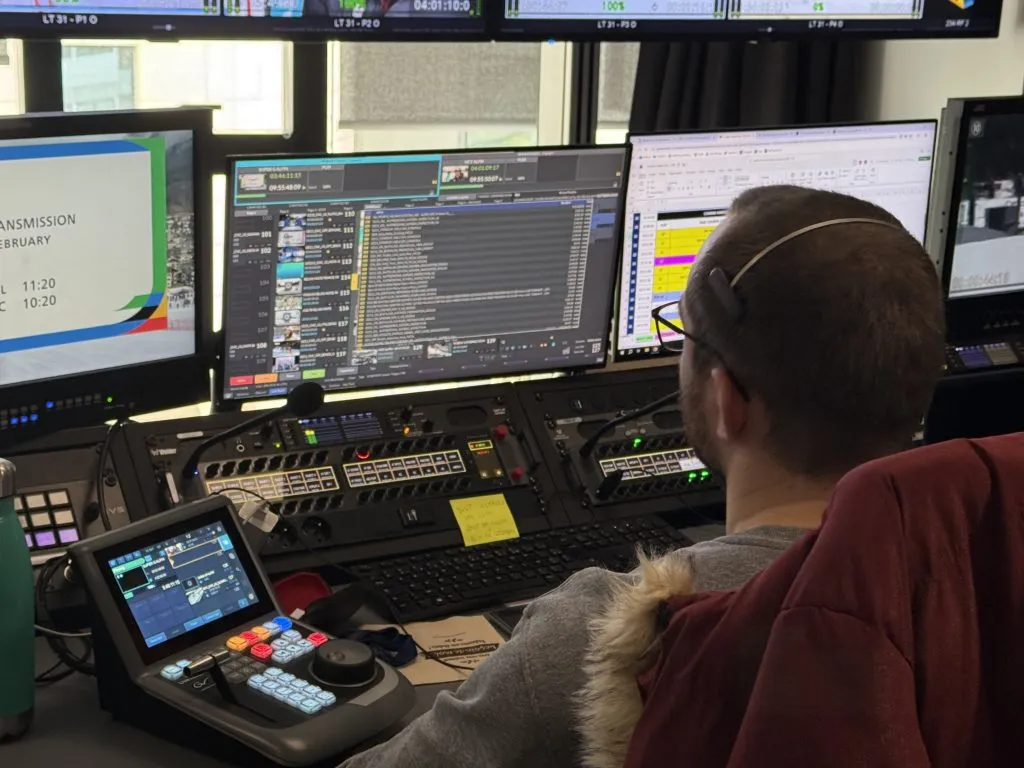
Why it matters: Delivering 42 linear channels in 22 languages, 62,000+ hours of recorded content, and 650 concurrent users across a multi-week live event is not a configuration challenge—it is an infrastructure architecture problem. Warner Bros. Discovery's deployment of Grass Valley AMPP for the Milano Cortina 2026 Winter Olympics offers a concrete blueprint for what Olympic-scale sports production actually requires.
The platform: AMPP microservices at Olympic scale
Grass Valley's AMPP platform underpins the entire operation through a microservices architecture that allows system components to be updated without disrupting live production. At peak, the platform handled over 4,000 recording tasks in a single day and supported more than 100 digital channels alongside 42 linear feeds—all managed through distributed teams across Europe and the US.
Key infrastructure improvements from prior Games
- Elastic Recorder X: Migrated from legacy GV I/O workflows to an MXF-based architecture, with 80 additional recording ports added to handle peak demand.
- Framelight X: A story-centric media production environment giving distributed editorial teams access to assets across 22 languages with improved search and metadata capabilities.
- Playout X Sports UI: Custom interface enabling operators to manage commercial breaks during live events across multiple regional channels with independent or synchronised feeds—from a single master playlist.
Resilience built into daily operations
Dual operational centres in Paris and London provide mutual failover—not as a disaster-recovery afterthought, but as a load-balanced part of normal daily workflow. This means redundancy is exercised continuously rather than tested only when something breaks, and remote production coordination happens without requiring on-site infrastructure at every venue.
What the numbers reveal
- 650 concurrent platform users at peak
- 600+ daily active users distributed across Europe and the US
- 62,000+ hours of recorded content across the Games
- 4,000+ recording tasks in a single peak day
- 4,000+ live events delivered across linear and digital platforms
Primeasure POV
- The shift from legacy I/O workflows to MXF-based recording was a prerequisite for scale—evaluate your ingest architecture early, not when you are already under production pressure.
- Dual-centre redundancy only delivers value if it is part of daily operations; failover that has never been exercised under real load is not reliable failover.
- A single master playlist driving localised outputs is the right model for multi-language, multi-region events—it keeps editorial control centralised while allowing regional flexibility without duplicating the entire content pipeline.
Planning Large-Scale Live Sports Production?
Primeasure can help architect AMPP-based workflows, assess ingest and playout requirements, and build resilience into your production platform before it is tested live.
Explore Primeasure's Broadcast solutions available across India.
Talk to PrimeasureSource: Grass Valley — Building a Platform for Olympic-Scale Sports Production